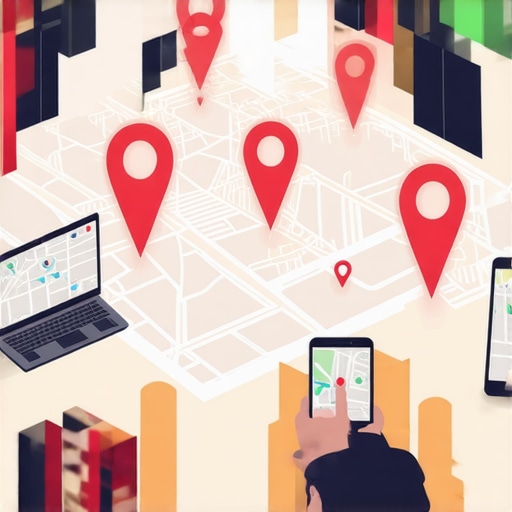
Why Your Competitors Outrank You on Maps and the Aggressive Move to Stop It
The Map Pack Mirage: Why Proximity Isn’t Enough in 2026
It is the single most frustrating experience for a business owner: You are sitting in your office, you search for your primary service, and despite being only three blocks away from the searcher, your business is nowhere to be found. Meanwhile, a competitor located three miles away is sitting comfortably in the #1 spot of the Google Map Pack. You’ve done the basics – you’ve claimed your profile, you’ve added photos, and you have a decent rating – yet you remain invisible.
Welcome to the “Map Pack Mirage.” For years, the common wisdom in local search was that proximity was king. If you were the closest relevant business to the user, you won. But in the 2026 search landscape, the rules have fundamentally shifted. Google’s local algorithm is no longer just a “radius” game; it is an authority and infrastructure game. The three pillars of local SEO – Relevance, Distance, and Prominence – still exist, but “Prominence” and “Relevance” have evolved to the point where they can, and frequently do, override “Distance.”
To dominate today, you must understand that google business profile seo is no longer about checking boxes; it’s about out-engineering your competition’s digital footprint. If your competitor is outranking you from further away, it’s because Google’s AI-driven algorithm perceives them as a more “prominent” and “trusted” solution for that specific user intent. They haven’t just optimized a profile; they’ve built a local authority engine. Before you can fix your rankings, you need to consult The Ultimate Google Maps SEO Audit Checklist for 2026 to see exactly where your infrastructure is leaking authority.
The 2026 Crackdown: Why Your Old Tactics Are Failing
If you are still trying to rank by stuffing keywords into your business name or buying cheap, incentivized reviews, you aren’t just wasting money – you are flagging your account for termination. The March 2026 Core Update marked a definitive turning point in how Google handles local entities. This update specifically targeted unethical local SEO practices, utilizing advanced neural networks to identify “unnatural” local patterns.
Google’s AI is now incredibly proficient at catching “suspicious edits” and “fake five-star reviews.” Gone are the days when you could change your business name to “Best Plumber Los Angeles” if your legal name is “Smith & Sons.” The algorithm now cross-references your business name against state registries, professional licenses, and historical web data. When a discrepancy is found, the profile doesn’t just drop in rank; it often vanishes entirely. If you’ve noticed a sudden dip, you may be a victim of this algorithmic purge. You can learn more about how to navigate these penalties in our guide on Why Your Business Profile Vanished From Maps and the 4-Minute Recovery.
Furthermore, the “spam pin” strategy – creating ghost offices or using UPS Store addresses – is effectively dead. Google’s AI now uses Street View data and advanced verification methods to ensure that a physical, staffed location exists. The 2026 crackdown isn’t just about cleaning up the map; it’s about rewarding businesses that demonstrate real-world legitimacy over those that rely on digital smoke and mirrors. If your competitors are outranking you, it may be because they have successfully navigated these trust filters while your profile is still sending “low-trust” signals to the algorithm.
The “Aggressive Move”: Engineering Your Local Infrastructure
To reclaim your territory, you need to stop thinking about “optimization” and start thinking about “Infrastructure Engineering.” As Rashid Rehman famously noted, “Local SEO isn’t marketing; it’s infrastructure.” This means every digital touchpoint must reinforce your local authority. The aggressive move is to build a moat of relevance that your competitors cannot cross.
First, you must align your website’s service pages with high-intent “near me” queries. In 2026, Google doesn’t just look at your Google Business Profile (GBP); it looks at the depth of the content on the URL linked to that profile. If you are a contractor, you need hyper-local landing pages that mention specific neighborhoods, local landmarks, and even local weather patterns that affect your work. This level of granular relevance tells Google that you aren’t just a business in a city; you are a fixture of a specific community.
Second, you must leverage the July 2025 Review Consolidation. Google now merges Local Service Ads (LSA) reviews directly into your main Business Profile management. If you are running LSAs but not aggressively managing the feedback loop between the two, you are leaving ranking power on the table. To rank higher on google maps, you need a unified review strategy that captures high-velocity, high-quality feedback across all Google platforms simultaneously.
Third, implement “Hyperlocal Post Clusters.” Don’t just post about your sales. Post about your involvement in local events, photos of your trucks parked near recognizable local landmarks, and updates on projects in specific ZIP codes. This creates a geo-relevance signal that is impossible for a distant competitor to fake. For a deeper dive into these technical levers, check out 5 Authority Signals That Actually Move Your Pin When Proximity Is Not Enough. This level of google business profile optimization ensures that your “Prominence” score outweighs your competitor’s “Distance” advantage.
Behavioral Signals: The New Ranking Currency
In the current algorithm, what users do is more important than what you say. Google tracks every interaction: clicks to your website, requests for directions, phone calls initiated from the profile, and even how long a user lingers on your photos. These are “Interaction Signals,” and they are the new currency of the Map Pack. If your profile has a low Click-Through Rate (CTR) compared to your competitors, Google will demote you, assuming you are less relevant to the searcher’s needs.
Improving your behavioral signals requires a psychological approach to your profile. You need high-impact visual assets that stop the scroll. This includes 360-degree virtual tours and high-resolution videos of your team in action. When a user spends more time engaging with your profile than your competitor’s, it sends a powerful “Trust” signal to the AI. This is often the missing link for businesses that have “perfect” SEO but stagnant rankings. You can find the specific blueprint for this in our article on How to Outrank Competitors on Maps by Fixing One Specific Interaction Signal.
To accurately measure these behavioral shifts, you need professional-grade local seo tools. Standard tracking often misses the nuances of “grid-based” rankings – where you might rank #1 at your front door but #10 two blocks away. By monitoring how behavioral changes impact your visibility across a geographic grid, you can identify exactly which interactions are driving your growth and which ones are lagging.
AI-Proofing Your Profile for Gemini and SGE
The future of local search is no longer just a list of pins; it is a conversational answer provided by AI Overviews (SGE) and Gemini. When a user asks, “Who is the most reliable HVAC technician for historic homes in downtown?” Google doesn’t just look for keywords; it looks for “entities” that fit that description. AI-proofing your profile means moving beyond keywords and into the realm of structured data and conversational relevance.
You must implement advanced Schema.org markup on your website that explicitly defines your service area, your specific services, and your relationship to local entities. Furthermore, your GBP “Q&A” section should be treated as a knowledge base. Seed it with the types of questions users ask Gemini. Instead of “Do you offer repair?”, use “How do you handle emergency HVAC repairs for 100-year-old homes in the West End?” This conversational approach ensures you are the “cited source” when AI generates a local recommendation. For more tactical advice, see Essential Google Business Profile Tips for 2026 Search Results.
Conclusion: The Path to #1
Dominating the Google Map Pack in 2026 is not a “set it and forget it” task. It is an ongoing battle of infrastructure, behavioral signals, and AI relevance. If your competitors are outranking you, it’s because they have built a more robust digital presence that Google trusts more than yours – regardless of proximity. The “Aggressive Move” is to stop playing defense and start engineering a profile that is impossible to ignore. Audit your profile, fix your interaction signals, and use a google maps rank tracker to monitor your progress as you reclaim your rightful place at the top of the search results. The map is yours for the taking – if you’re willing to build the infrastructure to hold it.